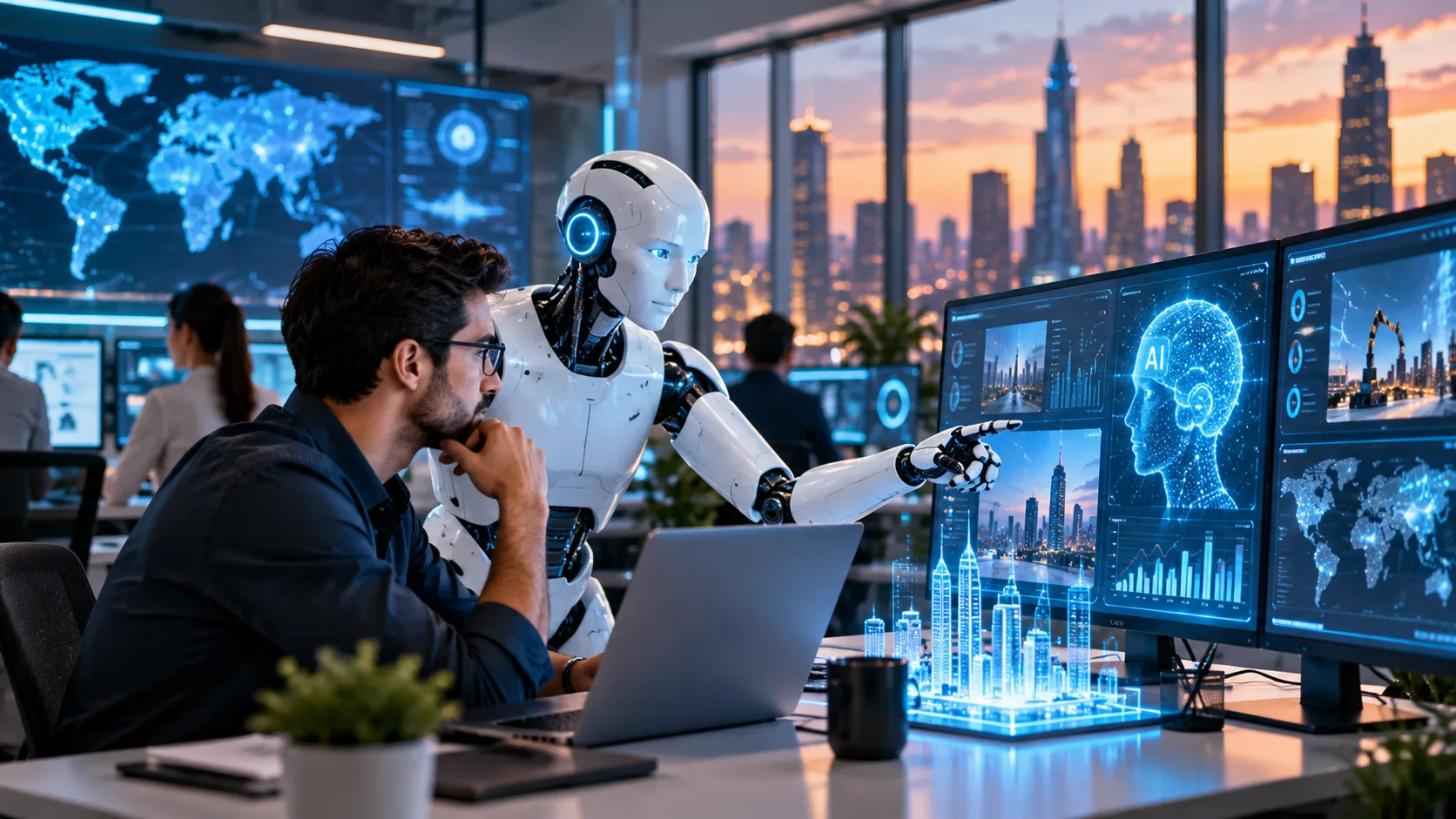
Artificial intelligence has become one of the most influential technologies shaping the modern digital world. From software development and cybersecurity to cloud computing and business automation, AI is changing how technology companies operate, innovate, and deliver services. Its growing capabilities allow organizations to process information, automate repetitive activities, and develop intelligent digital solutions.
The role of AI in the tech industry extends far beyond simple automation or virtual assistants. Technology companies use artificial intelligence to improve productivity, analyze complex datasets, strengthen security systems, and create personalized customer experiences. These applications have made AI an important part of modern technological development and business competition.
Understanding how artificial intelligence is transforming the technology industry helps businesses, professionals, and students recognize emerging opportunities. This article explores AI applications, benefits, limitations, career opportunities, and future developments that are reshaping the global technology sector.
What Is Artificial Intelligence in the Technology Industry?
Artificial intelligence refers to computer systems designed to perform tasks commonly associated with human intelligence. These tasks include recognizing patterns, understanding language, analyzing information, and generating predictions or content. AI systems use mathematical models, algorithms, and data to produce useful outputs. Their capabilities vary depending on the technology and how it has been developed.
In the technology industry, artificial intelligence supports software applications, digital infrastructure, and complex business processes. Companies integrate AI into existing platforms to improve efficiency and develop new features. For example, intelligent search systems help users find relevant information, while automated support tools assist with customer inquiries. These applications make digital services more responsive and accessible.
AI includes several related fields, such as machine learning, natural language processing, computer vision, and generative artificial intelligence. Each field addresses different technological challenges and business requirements. Machine learning identifies patterns in data, while generative AI produces text, images, or other content. Together, these capabilities expand what modern computer systems can accomplish.
Why AI Is Becoming Important in the Tech Industry
The increasing importance of AI comes from the growing need to manage complex information and improve operational efficiency. Technology companies handle enormous amounts of data through websites, applications, connected devices, and digital services. Traditional manual processes cannot always analyze this information efficiently. AI tools help identify patterns and support decisions across large datasets.
Competition also encourages businesses to adopt intelligent technologies that improve products and customer experiences. Software companies introduce AI-powered features to simplify tasks and differentiate their services. Organizations may use automated analytics, personalized recommendations, and intelligent search capabilities. These innovations can improve convenience when systems are designed and evaluated appropriately.
Another important reason is the increasing accessibility of AI development tools and computing infrastructure. Cloud-based platforms allow businesses to experiment with intelligent applications without developing every component independently. However, successful AI adoption still requires suitable data, technical knowledge, and responsible oversight. These requirements create additional opportunities throughout the technology industry.
How Artificial Intelligence Is Transforming Software Development
Software development is one of the most visible areas where artificial intelligence is changing traditional workflows. AI coding assistants can suggest programming solutions, explain unfamiliar code, and help developers identify potential errors. These capabilities may reduce time spent on certain repetitive tasks. However, generated code still requires careful testing, review, and security evaluation.
Development teams also use AI to support documentation, software testing, and debugging activities. Intelligent tools can help generate test cases and examine patterns associated with application failures. Developers remain responsible for evaluating whether suggested solutions meet project requirements. Effective collaboration between human expertise and AI assistance can improve software quality.
Artificial intelligence is also influencing how software products are designed and delivered to users. Companies incorporate conversational interfaces, recommendation engines, and automated content features into applications. These capabilities create new possibilities for user interaction and digital accessibility. As adoption increases, developers must understand both conventional programming practices and AI-specific limitations.
The Role of AI in Business Automation
Business automation is a major application of artificial intelligence within the technology sector. Organizations use intelligent systems to assist with repetitive activities such as processing documents, categorizing information, and routing customer requests. Automating suitable tasks can reduce administrative work and improve consistency. However, complex decisions often continue to require human judgment.
AI-powered workflow tools help connect business applications and streamline processes across different departments. For example, intelligent systems may classify incoming support requests and direct them to appropriate teams. Finance departments can use automated tools to assist with document processing and transaction reviews. These applications allow employees to concentrate on responsibilities requiring deeper expertise.
Successful automation depends on carefully selecting tasks that benefit from technological assistance. Inaccurate models or poorly designed workflows can introduce mistakes and operational disruption. Organizations therefore need testing, monitoring, and procedures for correcting errors. Responsible implementation makes automation more valuable while reducing unnecessary risks to employees and customers.
How AI Is Improving Cybersecurity and Data Protection
Cybersecurity is an increasingly important area where artificial intelligence supports technological development. Security systems analyze network activity, application behavior, and access patterns to identify potential threats. AI models can help highlight unusual behavior that deserves investigation. These capabilities support security professionals who must evaluate large amounts of information.
Machine learning can assist with phishing detection, suspicious transaction monitoring, and identifying unusual system activity. By examining patterns across available data, AI tools may recognize emerging warning signs. However, these systems can produce false alerts or overlook certain threats. Human security analysts remain essential for investigating incidents and interpreting complex situations.
Artificial intelligence also introduces new cybersecurity challenges because malicious actors may misuse intelligent technologies. AI applications themselves can face risks involving sensitive information, manipulated inputs, and unauthorized access. Organizations must therefore secure both traditional infrastructure and AI-powered systems. Combining appropriate technology with effective security policies creates stronger protection.
The Importance of AI in Data Science and Analytics
Data science uses statistical methods, computing systems, and analytical techniques to understand information. Artificial intelligence supports this process by identifying complex patterns and making predictions from suitable datasets. Technology companies apply these methods to customer behavior, product performance, and operational planning. Accurate insights can help organizations make better-informed business decisions.
Predictive analytics is one important application of machine learning in modern business environments. Companies may use forecasting models to estimate demand, identify operational risks, or anticipate maintenance requirements. These predictions help organizations prepare for possible future conditions. However, forecast accuracy depends on data quality, model assumptions, and changing circumstances.
AI-powered analytics can also make information easier for nontechnical employees to explore. Natural language interfaces allow users to ask questions and receive explanations of available data. Nevertheless, automated summaries can contain mistakes or misinterpret statistical relationships. Responsible analysis requires verification, contextual understanding, and appropriate data governance.
How AI Is Changing Cloud Computing Services
Cloud computing provides infrastructure that supports the development and operation of many artificial intelligence applications. Technology companies use cloud platforms to access computing resources, storage, and specialized AI services. This approach reduces the need to maintain every system locally. Organizations can adjust resources according to their changing technical requirements.
AI also helps improve certain cloud management activities through intelligent monitoring and automated recommendations. Systems may analyze resource usage, identify unusual behavior, or suggest adjustments to computing capacity. These capabilities can support performance management and operational planning. However, automated recommendations still need evaluation against business requirements and service reliability.
The relationship between cloud computing and AI continues creating opportunities for specialized providers. Businesses require secure infrastructure, reliable data pipelines, model deployment tools, and ongoing system monitoring. These services support the broader AI ecosystem. As intelligent applications become more complex, cloud architecture and cost management remain important technical considerations.
AI in Customer Service and User Experience
Artificial intelligence is transforming customer service by making automated assistance available across digital platforms. AI-powered chatbots can answer routine questions, provide product information, and guide users through standard procedures. These tools can support customer service teams outside normal business hours. However, they must provide clear escalation options when human assistance is necessary.
Personalization is another important application of AI in customer experience management. Recommendation systems analyze relevant user interactions to suggest products, content, or services. Streaming platforms, online stores, and software applications use these methods to improve content discovery. Effective personalization should also respect privacy and provide appropriate user controls.
Technology companies use AI-assisted analysis to understand customer feedback and identify recurring problems. Automated systems can organize support requests and highlight common service concerns. These insights help businesses improve products and communication strategies. Human oversight remains important to ensure that customers receive accurate, respectful, and useful assistance.
How AI Is Supporting Innovation in the Technology Sector
Innovation is one of the strongest reasons artificial intelligence plays a growing role in technology. AI helps organizations experiment with new applications, product features, and problem-solving methods. Researchers use computational models to investigate complex questions, while software companies develop intelligent digital services. These activities create opportunities for businesses across different technology markets.
Generative AI has introduced new ways to create and interact with digital content. Applications can assist with writing, software prototypes, image generation, and information retrieval. These capabilities may accelerate early-stage experimentation and creative workflows. However, AI-generated material requires evaluation for accuracy, originality, and suitability before professional use.
Artificial intelligence also encourages collaboration between established technology companies and emerging startups. Businesses develop specialized tools for healthcare, finance, education, and industrial applications. Each field creates unique requirements for software engineering and responsible implementation. This growing diversity helps expand the technology industry’s range of products and services.
The Role of AI in Healthcare Technology
Healthcare technology demonstrates how artificial intelligence can support specialized digital applications. AI systems may assist researchers and healthcare professionals with medical image analysis, administrative tasks, and clinical information management. Some tools help identify patterns that deserve further evaluation. However, medical decisions require qualified clinical judgment and appropriate regulatory safeguards.
Hospitals and healthcare organizations also explore AI applications for scheduling, documentation, and resource planning. Automating routine administrative tasks may allow professionals to devote more attention to patients. These systems must protect sensitive medical information and meet applicable privacy requirements. Effective implementation depends on accuracy, reliability, and careful integration into clinical workflows.
Medical research is another area where AI provides potentially valuable assistance. Computational models can help researchers analyze scientific information and explore possible relationships within complex datasets. However, model-generated findings require scientific validation before practical use. AI should support healthcare expertise rather than replace evidence-based medical decision-making.
How AI Is Transforming Financial Technology
Financial technology companies use artificial intelligence to improve analytical systems and automate selected financial services. Applications include transaction monitoring, fraud detection, customer support, and financial data processing. AI models can examine patterns across large volumes of transactions. These insights may help organizations identify unusual activity more efficiently.
Banks and digital payment providers also use machine learning to support risk assessment and operational forecasting. Automated systems may assist with identifying potentially fraudulent transactions or evaluating specific financial patterns. However, financial decisions require strong governance and attention to fairness. Inaccurate or biased models can create serious consequences for customers.
The adoption of AI in financial technology increases demand for secure software, transparent decision-making, and responsible data management. Financial organizations must consider privacy, regulatory requirements, and model reliability. Human review remains especially important when decisions affect access to financial services. Responsible innovation helps maintain confidence in digital financial systems.
AI and the Future of E-Commerce Technology
E-commerce platforms increasingly use artificial intelligence to improve shopping experiences and business operations. Recommendation systems can suggest products based on relevant customer preferences and shopping behavior. AI-powered search tools also help users discover items through conversational or descriptive queries. These features can make online shopping more convenient.
Retail businesses use machine learning to assist with inventory forecasting, customer support, and product information management. Predictive systems may help estimate demand and identify changes in purchasing patterns. However, businesses should evaluate forecasts carefully before making major inventory decisions. Unexpected market conditions can reduce the accuracy of historical predictions.
AI adoption also raises questions about customer privacy and the responsible use of shopping data. Consumers should receive clear information about relevant data practices and automated interactions. Businesses benefit from maintaining trustworthy services rather than prioritizing personalization at any cost. This balance supports sustainable innovation in e-commerce technology.
How AI Is Creating New Jobs in the Tech Industry
Artificial intelligence is changing employment opportunities by creating demand for specialized technical skills. Organizations need professionals who can develop, test, deploy, and maintain AI-powered systems. Roles involving machine learning engineering, data science, AI governance, and software integration have become increasingly relevant. These positions require different combinations of programming, analytical, and communication skills.
AI also influences existing jobs rather than only creating entirely new occupations. Software developers, cybersecurity analysts, designers, and business specialists increasingly work with intelligent tools. Some routine activities may become automated, while other responsibilities require additional oversight and technical knowledge. This shift makes continuous learning important for professional development.
Career opportunities extend beyond advanced model development into areas such as technical writing, product management, quality assurance, and responsible technology implementation. Individuals who understand both industry requirements and practical AI capabilities can contribute in different ways. Building fundamental digital skills remains valuable. Adaptability helps professionals respond to changing expectations within the technology sector.
Benefits of Artificial Intelligence for Technology Companies
One major benefit of artificial intelligence is its potential to improve operational efficiency. AI applications can process information, assist with repetitive work, and support faster analysis of complex datasets. These capabilities may reduce time spent on certain administrative or technical activities. The actual benefits depend on system quality and appropriate implementation.
Artificial intelligence can also improve digital product experiences through personalization, intelligent search, and automated assistance. Technology businesses use these features to simplify interactions and introduce useful services. AI-supported analytics may help organizations understand customer needs and identify potential improvements. However, meaningful results require accurate information and thoughtful product design.
Another advantage is the ability to explore innovative solutions that would be difficult to develop using conventional methods alone. AI can support experimentation, forecasting, and complex information processing. These capabilities create opportunities for new products and specialized services. Companies achieve better results when technological investment aligns with genuine business problems.
Challenges and Risks of AI in the Technology Industry
Despite its advantages, artificial intelligence introduces several challenges that technology companies must address. AI-generated information can be inaccurate, incomplete, or misleading, particularly when systems operate without proper verification. Businesses that rely on automated outputs without oversight may make costly mistakes. Regular evaluation and clear accountability help reduce these risks.
Data privacy and cybersecurity are also major concerns because many AI applications depend on large amounts of information. Poor data handling practices can expose sensitive business or customer records. Models may also reflect biases present in training data or system design. Organizations need suitable safeguards, access controls, and responsible data management procedures.
AI implementation can require substantial investments in infrastructure, skilled professionals, and ongoing maintenance. Not every business process benefits equally from automation or intelligent systems. Employees may also need training as responsibilities change. Careful planning helps organizations avoid adopting expensive technologies that provide limited practical value.
Why Human Expertise Still Matters in an AI-Driven Industry
Artificial intelligence can perform many useful tasks, but it does not eliminate the need for human expertise. Professionals remain responsible for defining objectives, evaluating results, and making decisions involving complex real-world consequences. AI systems can generate suggestions without fully understanding organizational priorities. Human judgment provides essential context for responsible technology use.
Creative problem-solving, ethical reasoning, and interpersonal communication remain important across the technology industry. Developers must evaluate software reliability, while managers consider how technological changes affect employees and customers. Security teams investigate unusual activity rather than relying entirely on automated alerts. These responsibilities demonstrate the continuing importance of skilled professionals.
The most effective approach often combines intelligent tools with human knowledge and accountability. AI can assist with information processing and routine activities, allowing professionals to focus on complex work. However, organizations should maintain clear oversight and procedures for correcting errors. Collaboration between people and technology supports more reliable outcomes.
What Is the Future Role of AI in the Tech Industry?
Artificial intelligence is expected to remain an important influence on technological development. Advances in machine learning, generative models, and intelligent software may introduce new capabilities across different industries. Businesses will continue exploring applications that improve productivity and digital services. However, adoption will depend on affordability, reliability, and demonstrated usefulness.
Future AI systems may become more integrated with business software, connected devices, and cloud infrastructure. Intelligent assistants could support increasingly complex workflows while specialized models address industry-specific problems. These developments will require stronger evaluation, cybersecurity, and data governance practices. Human oversight will remain important as automated systems become more capable.
The long-term role of AI will also depend on public trust, responsible innovation, and opportunities for workforce development. Technology companies must address privacy, fairness, environmental costs, and changing skill requirements. Organizations that balance innovation with accountability may be better prepared for future challenges. AI’s influence will continue evolving alongside the wider digital economy.
Conclusion
The role of AI in the tech industry has become increasingly important as businesses adopt intelligent digital solutions. Artificial intelligence supports software development, cybersecurity, cloud computing, automation, and data analytics. These applications help organizations manage complex tasks and explore new opportunities. However, achieving meaningful benefits requires careful planning and reliable implementation.
AI is also transforming how technology companies develop products, serve customers, and organize business operations. Its growing influence creates demand for new skills, specialized services, and responsible management practices. Despite these opportunities, organizations must address challenges involving accuracy, security, privacy, and fairness. Human expertise remains essential for effective decision-making and oversight.
As artificial intelligence continues evolving, its relationship with the technology industry will likely become even more significant. Companies that adopt AI thoughtfully can explore innovation while maintaining dependable services. Professionals can prepare by developing practical technical knowledge and adaptable skills. The future of AI in technology will depend on combining intelligent systems with responsible human leadership.
Frequently Asked Questions
What is the main role of AI in the tech industry?
The main role of AI is to support automation, data analysis, software development, and intelligent digital services. It helps technology companies improve selected processes, develop new products, and solve complex problems more efficiently.
How is AI changing software development?
AI assists developers with coding suggestions, debugging, documentation, and software testing. These tools can improve productivity, but generated solutions still require human review to ensure accuracy, security, and compatibility.
Why is AI important for technology companies?
AI helps technology companies analyze information, automate suitable tasks, personalize digital services, and introduce innovative products. Its value depends on reliable data, appropriate implementation, and effective human oversight.
Will AI replace jobs in the technology industry?
AI may automate certain tasks and change some job responsibilities, but it also creates demand for new skills and specialized roles. Human expertise remains important for development, evaluation, security, and decision-making.
What is the future of AI in the tech industry?
AI will likely become more integrated into software, business systems, cloud services, and specialized applications. Future progress will depend on technical advances, affordability, regulations, responsible implementation, and public trust.